Hey there, online world.
I’m Amber Yang.
I am a nonprofit director, speaker, multimedia educator, professional mediator, and dialogue facilitator dedicated to awakening genuine transformation in our lives, relationships, communities, organizations, and the larger world.
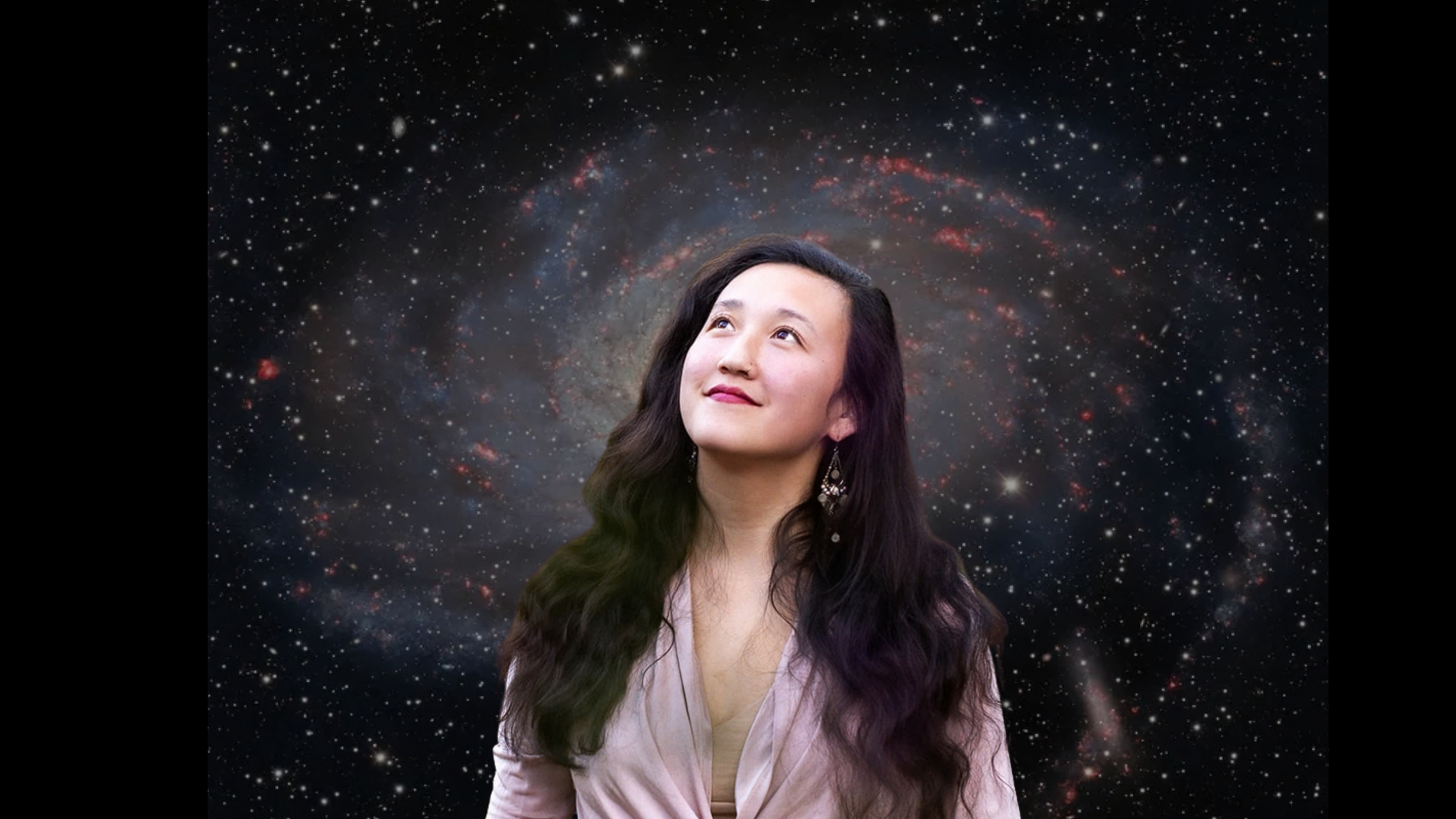
The Work I Do
I am the director of WantToKnow.info, a nonprofit news and education platform dedicated to investigating under-reported issues, the hidden forces shaping history and driving today’s global challenges, and the inspiring stories and real-world solutions that remind us of the greater good and what’s possible.
Through investigative journalism, media literacy, and multimedia storytelling, my work explores how we can build a more mindful and conscious media movement to bring about constructive social and political change—cultivating the courage, viewpoint diversity, and discernment needed to understand the complex world we live in and inspire meaningful change.
I am also for Citizens for UFO Disclosure with the New Paradigm Institute. UFO disclosure may be the wild card we need to spark a deeper shift in consciousness, helping us recognize our place in a profoundly interconnected universe and opening the door to technologies and ideas that could transform how we address humanity’s greatest challenges.
The crisis beneath today’s conflicts is not just political, but existential. The culture wars, identity politics, negative news overload, and the politicization of everything have numbed us to the sound of the genuine. In today’s attention economy, the voices who polarize, provoke, and hijack emotions are the ones who get heard.

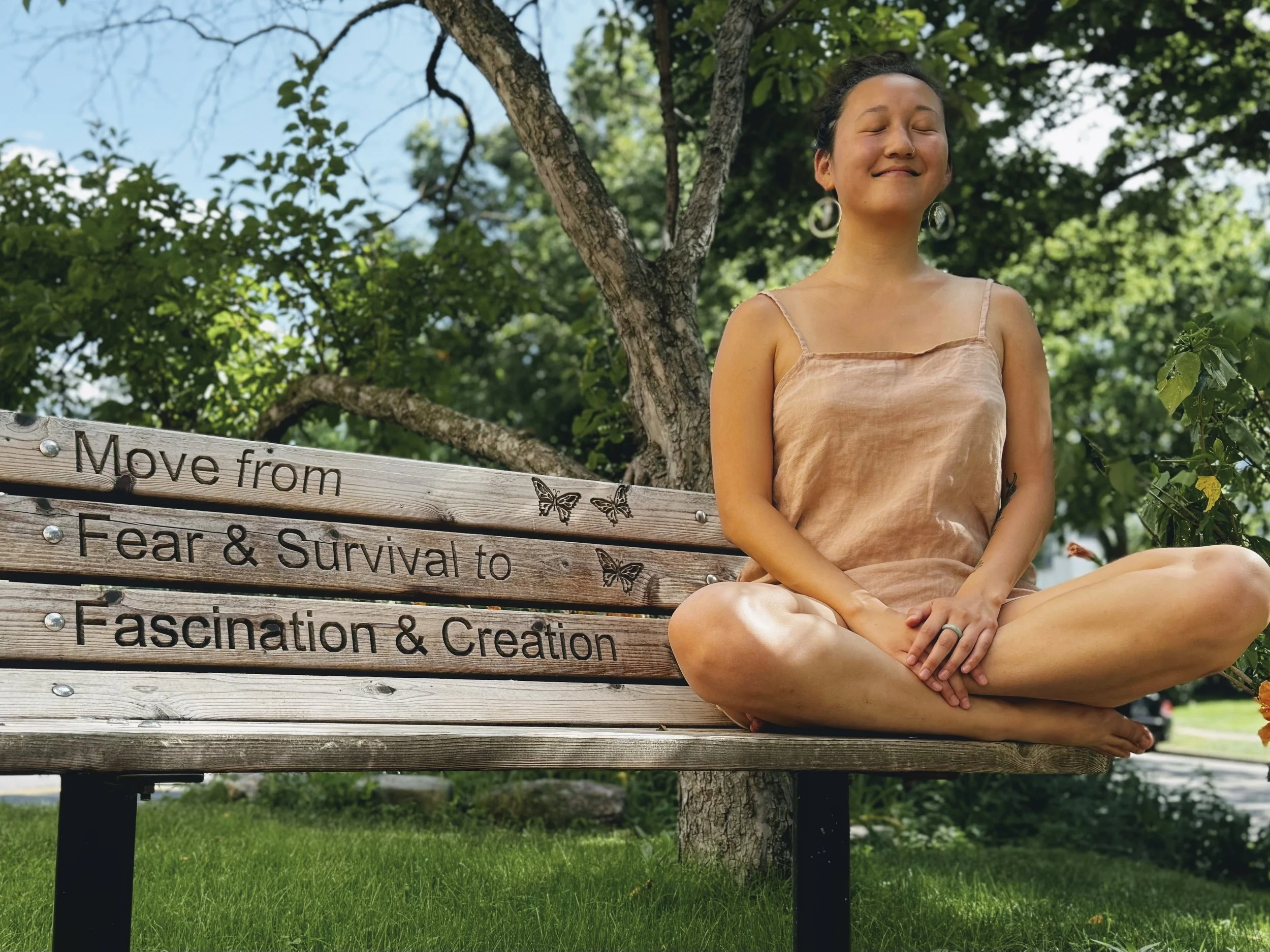
Picture taken at the F Word Exhibit, which features stories of profound forgiveness in the face of war and other most unlikeliest of places. See my interview with peace activist and journalist Marina Cantacuzino, the voice and vision behind the F Word Exhibit.
“The capacity for profound, intimate experience is in jeopardy. [Social media] is replacing face-to-face friendships and corporations are manipulating what we see, think and feel—as well as how we vote and get our news. In short, we are losing our capacity for presence, discernment, and psychospiritual depth. We seek after the instant and neatly packaged.”
— Existential-humanistic psychologist Kirk Schneider
I’m here to inspire the transformation and healing of our world by offering the kind of information that empowers this shift. My work weaves together the nuanced truths behind society’s deepest challenges with the visionary and inspiring ideas, movements, and individuals working to transform those very systems.
Reflections on Transforming a Divided and Violent World
A 12-minute visually impactful video where I reflect on the profound awakening and initiations that led me on a path of personal and collective transformation.
Education and Professional Background
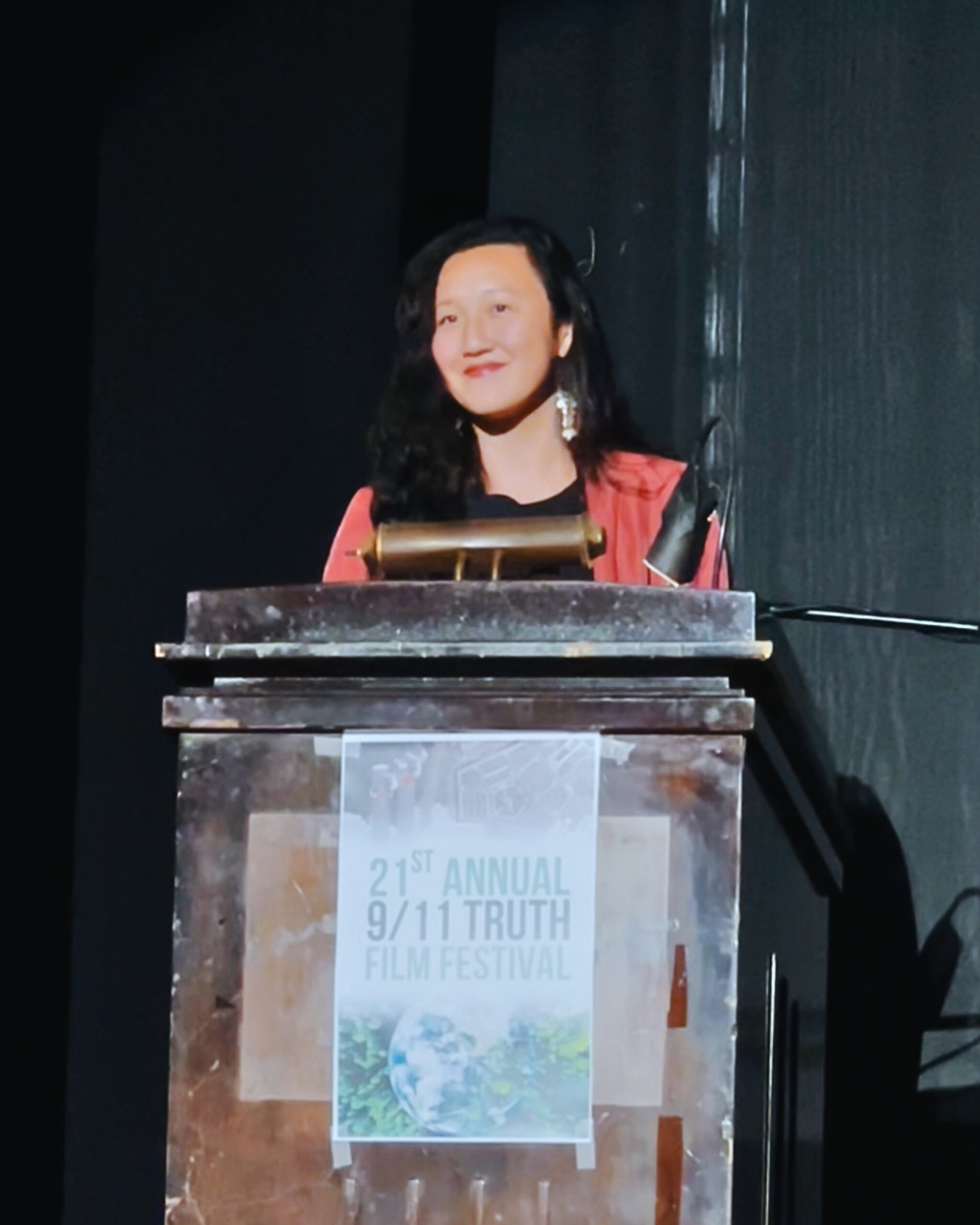
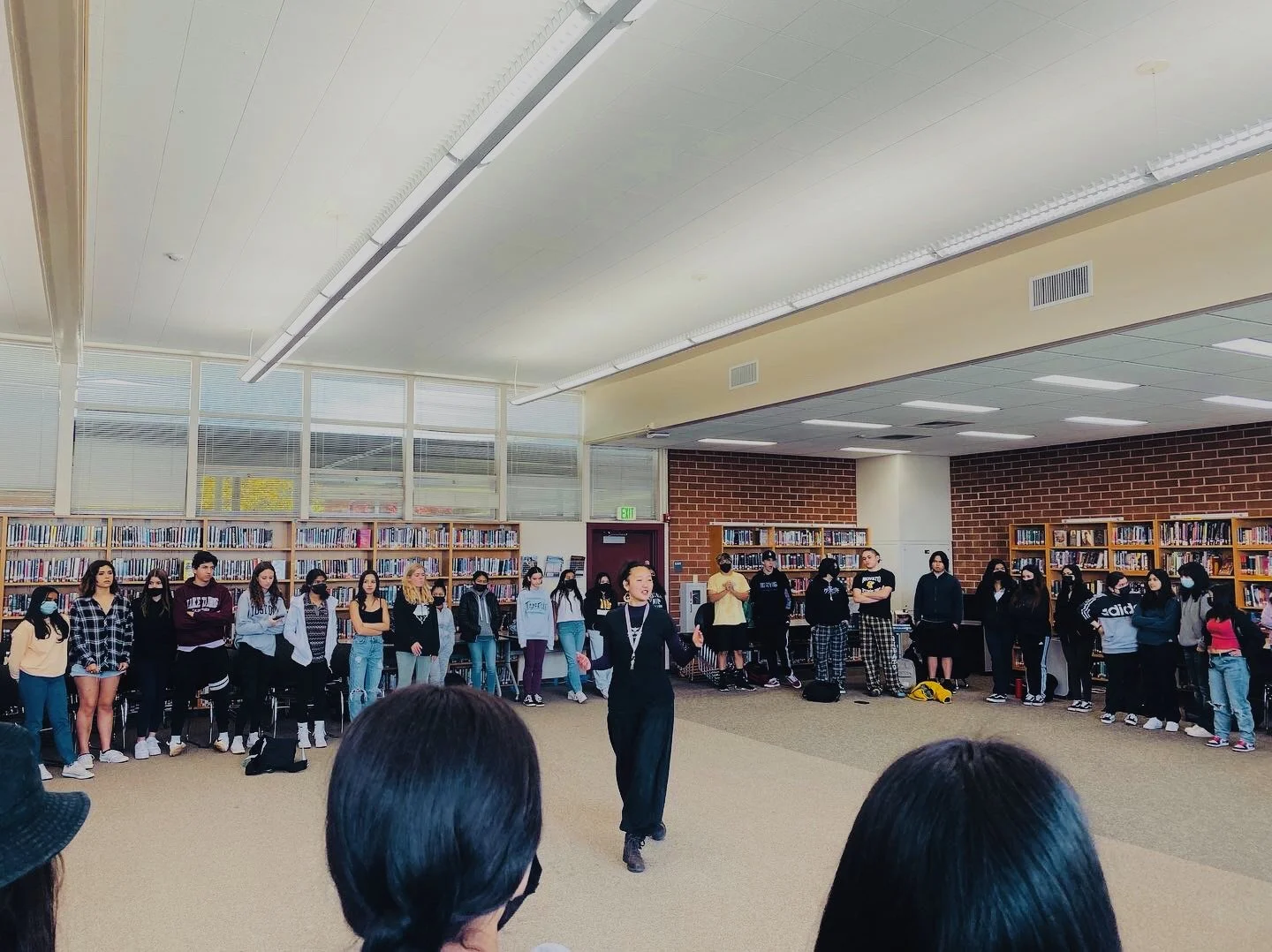
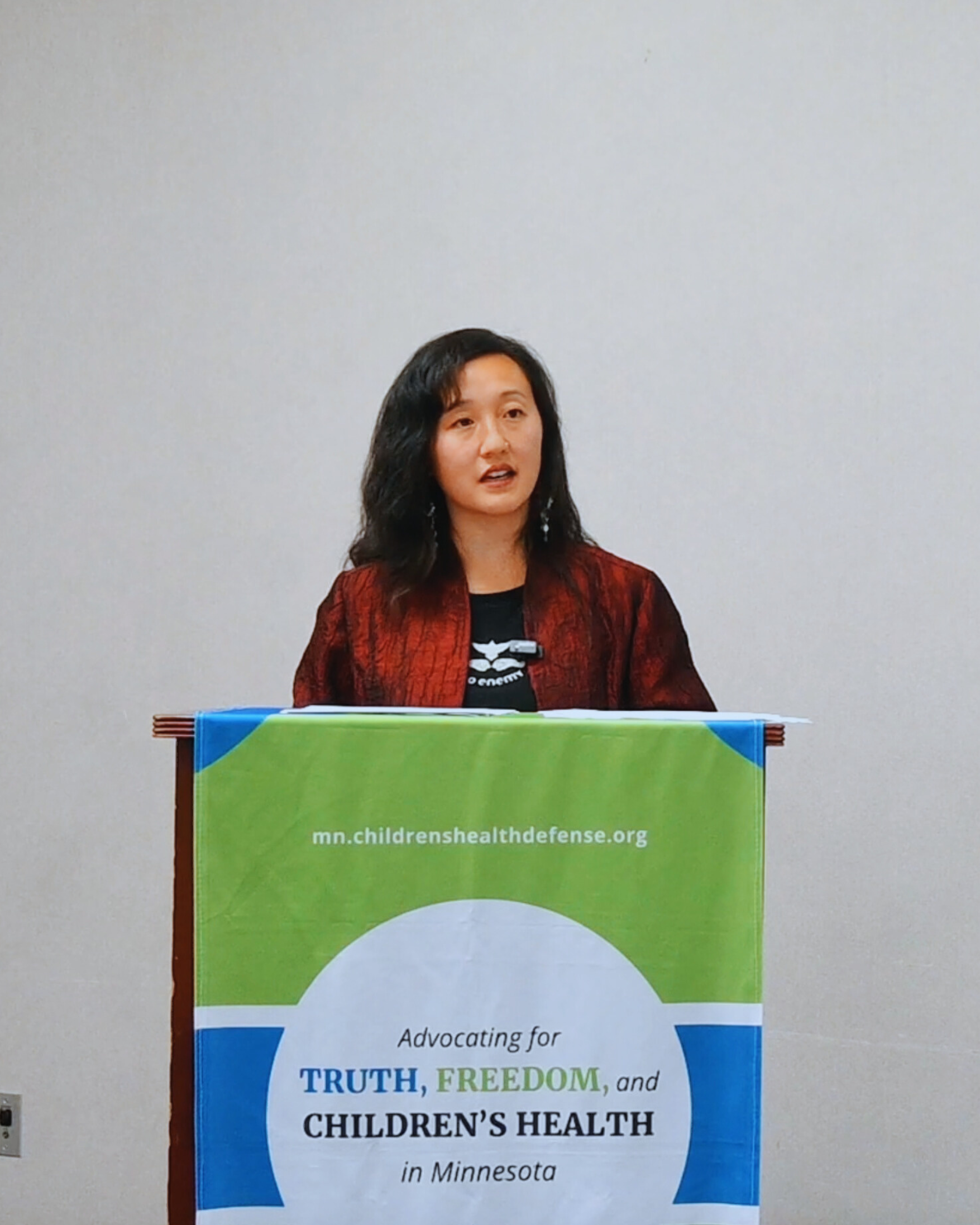
From a young age, I’ve always carried a deep desire to understand and respond to the suffering and violence I saw in the streets and larger world. Later, the work of recognizing, healing, and transforming cycles of trauma and violence that had lived within me and my family helped deepen and clarify that path. These experiences directed my life’s work toward holistic health studies, restorative justice, and nonviolent activism and living. Now, I’m building a more mindful and conscious media movement that moves beyond fear, division, and polarization to bring about constructive social and political change.
I hold a Bachelor’s in Psychology and a minor/certificate in Holistic Health Studies at San Francisco State University. My studies focused on understanding both the inner and outer dimensions of human well-being. I studied both Western and Eastern approaches to self-regulation, stress reduction, nervous system regulation, and alternative and integrative health practices. I discovered a passion for what brings out the best in humanity, through practical approaches like positive psychology and Appreciative Inquiry (AI), a framework for change that focuses on identifying strengths and what’s already working—and how we can strengthen and/or re-create conditions that allow people and systems to thrive.
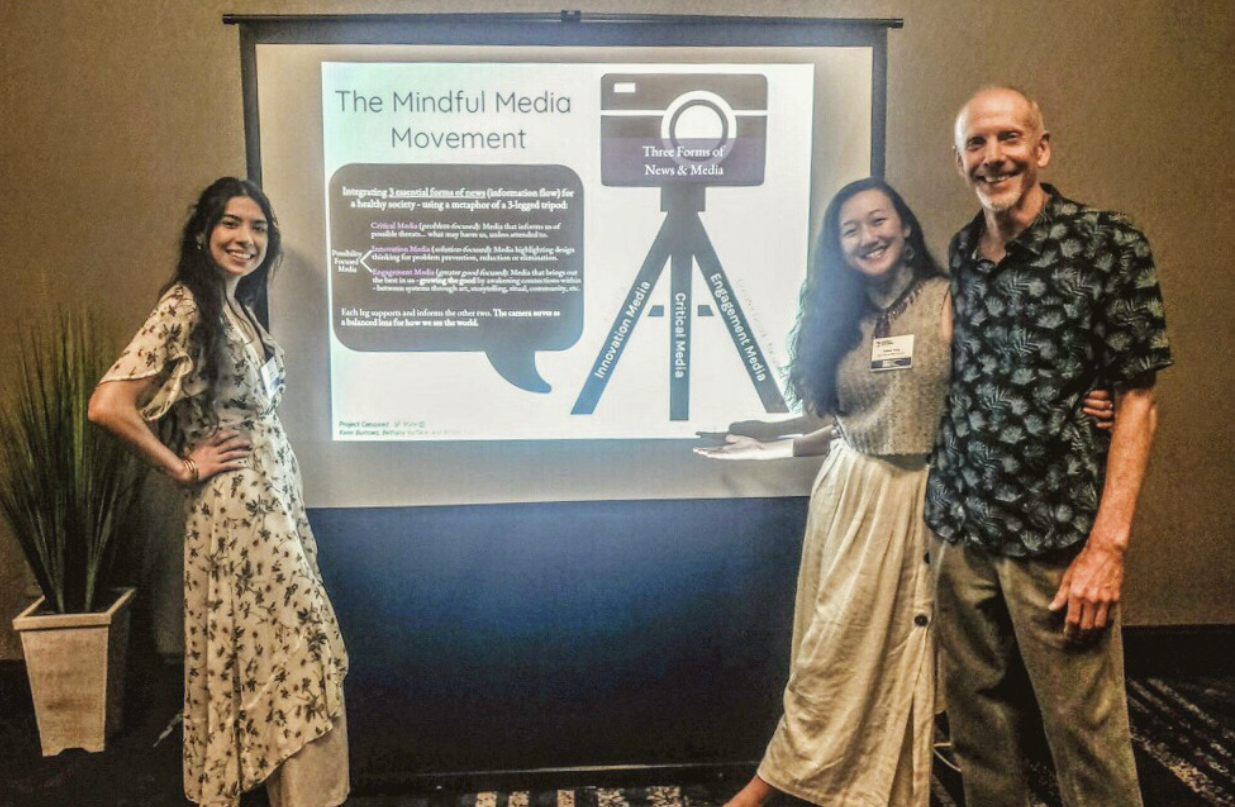
Through my undergraduate education, I learned that well-being is more than individual wellness and feel-good slogans. It’s learning to think holistically about the challenges we face—from our food systems, economic structures to the technologies and political structures that influence how we live. I learned fascinating models like integral psychology, which provides an evolutionary framework for understanding how human consciousness and society evolve over time. During this time, I helped organize and facilitate community events, conferences, and teach-ins including Digital Living: Exploring the Impact of Technology and Social Media on Health and Society and From Polarization to Integration —A New Vision of Health, Activism & Cultural Evolution. It was also during this period that I became deeply engaged in media studies through my work with Project Censored, a nonprofit dedicated to critical media literacy, understanding the machinery of propaganda and censorship, and upholding independent media as a cornerstone of a healthy democracy. Through this work, I co-created the Constructive Journalism and Mindful Media Movement, an initiative that calls for a reimagining of media and journalism, engaging people across political and cultural lines and emphasizing solutions and collective power.
My fascination with the challenges and opportunities of human collaboration is what led me to attain my Master’s in Organizational Development (OD) and Change from Sonoma State University. In this program, I engaged in systems thinking, participatory leadership and collaboration, group facilitation and consensus-building, Enneagram coaching, and effective communication and feedback skills. This work also deepened my understanding of how individuals, organizations, and larger social systems interact and respond to the complex challenges of our time. Over the years, I have consulted and supported K-12 and university school systems, local nonprofits, and community and activist groups. I am also involved with Safe Tech International, a movement that advocates for balanced and wise use of technology.
Restorative Justice Work
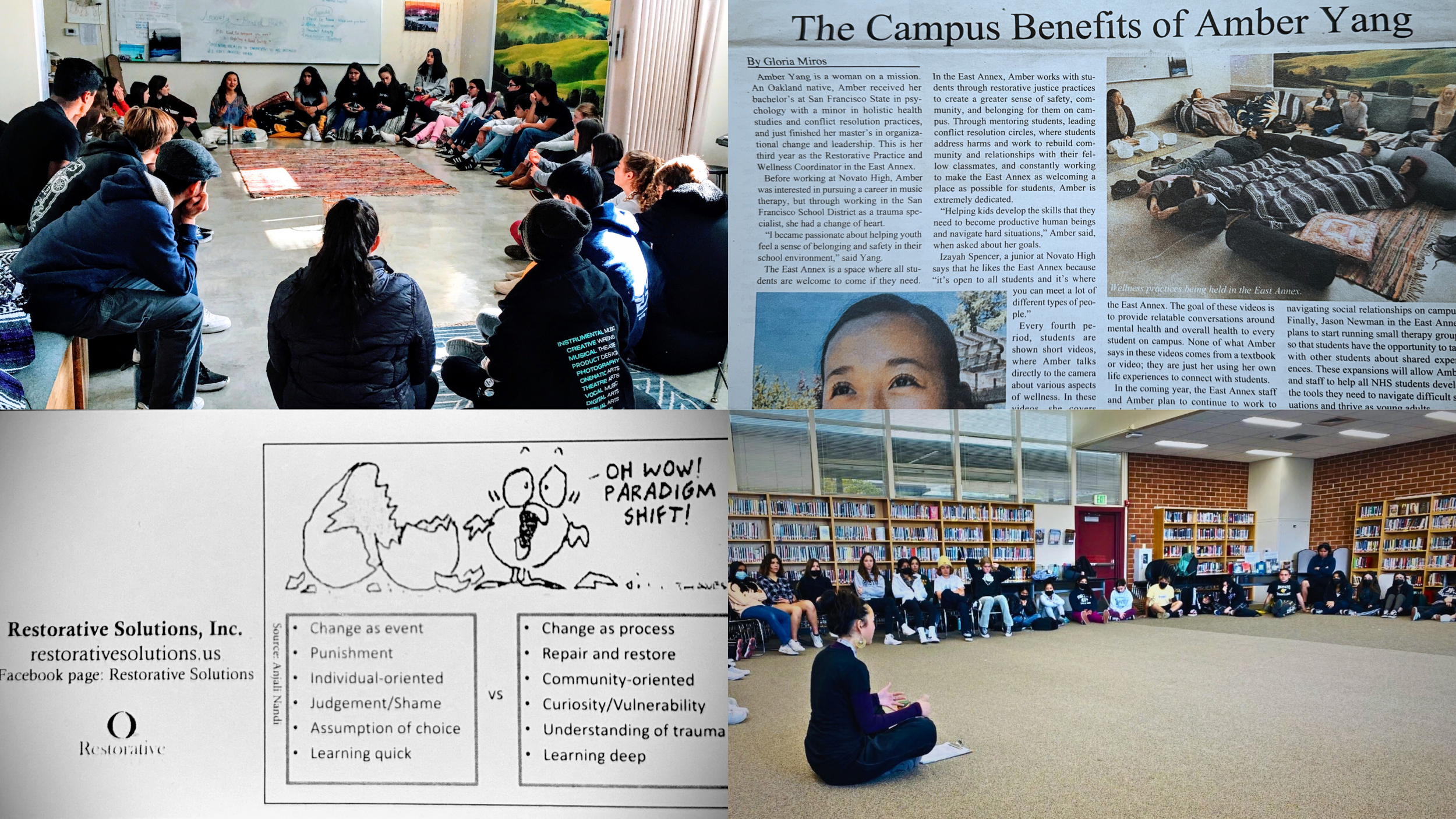
For 6+ years, I worked in the public school systems of the Bay Area, California. I taught yoga, mindfulness, and positive psychology in an afterschool youth program and then was a paraeducator for at-risk youth impacted by trauma and poverty. At a public high school in Marin County, CA, I was the head of the restorative justice program—an alternative, holistic approach to transforming conflict and violence in schools, prisons, court systems, and the larger community. Restorative justice centers circle dialogue, accountability, conflict transformation, and community support, helping communities address and resolve root causes together rather than feeding systems of punishment, recidivism, and mass incarceration.
During this time, I built deep and powerful relationships with youth, families, police officers, school staff and administrators—and led hundreds of circles bringing people together in dialogue who never thought they’d be in the same room together. I also facilitated community circles to address tough issues like cancel culture, school violence, bullying, substance use, youth suicide, the role of school police, sexual abuse, the impact of social media and technology, and much more. At this high school, I also ran a wellness center, mentored countless youth, and regularly taught stress management skills, social-emotional skills, and health education.
Nonviolent Activism Work
I taught and co-facilitated the leadership internship within the Holistic Health Studies program at San Francisco State University. This program focused on the Season for Nonviolence, a global 64-day educational and grassroots campaign dedicated to the strategic and spiritual legacy of Mahatma Gandhi and Dr. Martin Luther King Jr. The Season for Nonviolence is divided into three arenas of practice: I. Self (Mind, Body, Spirit); II. Others (Communication and Relationship); and III. Earth (Eco-Global).
The word “nonviolence” is a rough translation of the Sanskrit term ahimsa, meaning the power that comes into effect when the desire to harm, kill, or dehumanize is eliminated. In its original sense, nonviolence does not mean the absence of violence. It was never meant to describe passivity, avoidance, or the tolerance of abuse. Gandhi and King called for principled nonviolence, a strategic set of skills, actions, and principles to:
1) understand violence and the systems and conditions that produce it
2) hold systems and people accountable without enemy-making and dehumanization
3) create pathways toward open dialogue, reconciliation, and workable alternatives that benefit all parties
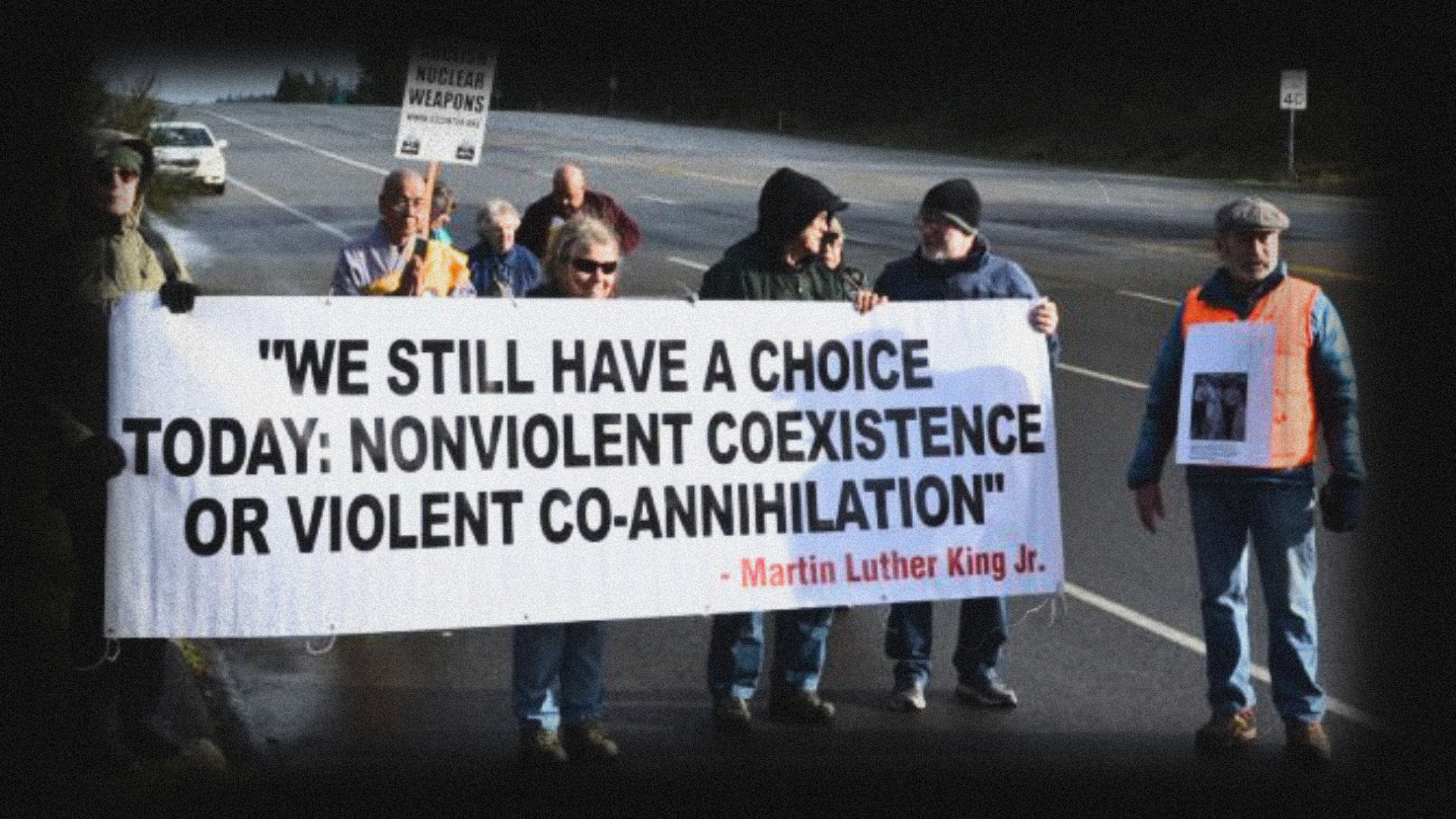
Underneath every social conflict are human needs trying to be met.
We’re often taught that the only choices we have in conflict are win or lose. Nonviolence reveals a third choice: reimagine. We need new tools, skills, ideas, and actions that match the level of complexity in the environment and embody the world we actually want.
In the program, I facilitated conversations on cultural and collective trauma and how it shows up in our systems, our relationships, and the way we make sense of the world. I also taught nonviolent communication, a conflict transformation model developed by psychologist Marshall Rosenberg who spent his life studying conflict in real-world conditions in an effort to understand what actually transforms it. His model for conflict transformation was informed by decades of experience facilitating dialogue in war-torn conflict zones, prisons, criminal justice systems, indigenous communities, public schools, families, and communities all over the world.
“It hurts to witness violence, it hurts to experience violence, and it hurts to inflict violence. Each causes trauma.
Yes, we need to fight. But only so that we can create spaces to heal and to build. Nonviolence requires us to look at the pain that we carry ourselves, and the pain that we inflict on each other within our communities. It is easy to point the finger and say that the violence is "over there."
Nonviolence ... is the science of understanding conflict, much like cosmology is the science of understanding the origins of the universe.
[This] is when we begin to enter into the shugyo of nonviolence [training the spirit, mind, and body]. Shugyo is not only about learning a tactical skill. It is about engaging in what Gandhi called “self-purification,” … purifying our own selves of trauma, hatred, and delusion. If we carry intergenerational trauma, we also carry intergenerational wisdom. It’s in our genes and our DNA."
— nonviolent activist and restorative justice practitioner Kazu Haga, Healing Resistance: A Radically Different Response to Harm
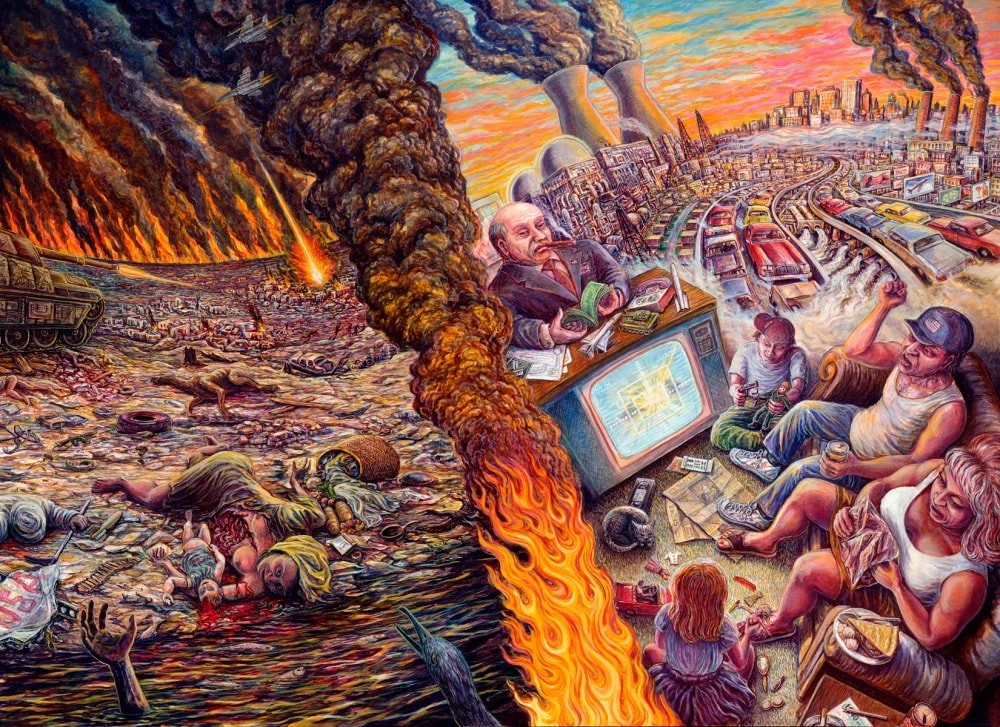
Art by Mark Henson
Consciousness and Soulwork
Understanding the world we live in requires looking at both the systems that shape reality and the consciousness through which reality is experienced. Part of my current media work involves the exploration of human consciousness and the nature of reality, including credible, scientific investigations into near-death experiences. My rigorous research points to a profound truth: consciousness does not end when we die, and this lifetime is part of a much larger, mysterious journey of evolution and growth that our souls belong to.
As souls having a human experience, ego isn’t the problem. Our ego identities are part of how we’re wired—helping us navigate the world, protect our boundaries, and maintain safety in this physical, material reality we live in where human choices, actions, and relationships have real impact. The question is whether it’s running the show or working in service to something deeper—as real societal transformation requires that we move beyond survival as the primary driver of how we think, relate, and act.
“The only devils in the world are those running around in our own hearts; that is where the battle should be fought. My life is my message.” — Mahatma Gandhi
Near the end of his life, psychologist Abraham Maslow came to see that our highest human need is not just self-actualization, but self-transcendence: the ability to live for something greater than ourselves. Self-transcended leaders are no longer driven by personal grievance, unresolved trauma, or the weapons of the unhealthy ego like greed, control, moral superiority, judgment, and enemy-making.
I believe soulwork is where this self-transcendence takes form.
To me, soulwork is what we do in this lifetime, however small or large, to acknowledge, develop and express our unique gifts and capacities regardless of our personal life conditions and the chaos unfolding in the world. This also means healing and purifying ourselves from whatever is getting in the way of expressing those gifts and capacities.
I regard soulwork as the essence of service learning, where we gain knowledge and skills through actively contributing to real needs in the world. By learning through service, we discover who we are, what brings out the best in us, and what we’re here to contribute by taking responsibility for the work, discipline, and real-world conditions required to bring our contributions to life.
I believe each of us can be transformation agents when we connect with our soulwork.
Our existence is not merely accidental nor mechanical. We chose to be here—to take part in the unfolding of human experience and evolution, including its most darkest of lessons.

Get to know your fears, blind spots, and comfort zones. Transform yourself to transform the world.
Freeing ourselves from harmful systems starts from within, and what we do to grow and evolve as individuals in a world filled with groupthink and conformity. It starts with what we do to heal our bodies and minds from toxic chemicals, toxic beliefs, and toxic ways of relating to each other. It deepens as we harmonize our choices with the natural world. It transforms when we break free from the illusion of artificial scarcity—reclaiming a relationship with money and community that is rooted in social capital, trust, and abundance.
My activism isn’t just based on the facts and data stored in my head about how the world works. This activism calls for personal transformation, knowing ourselves outside the distress of oppression and fear to create the world we want to live in.